

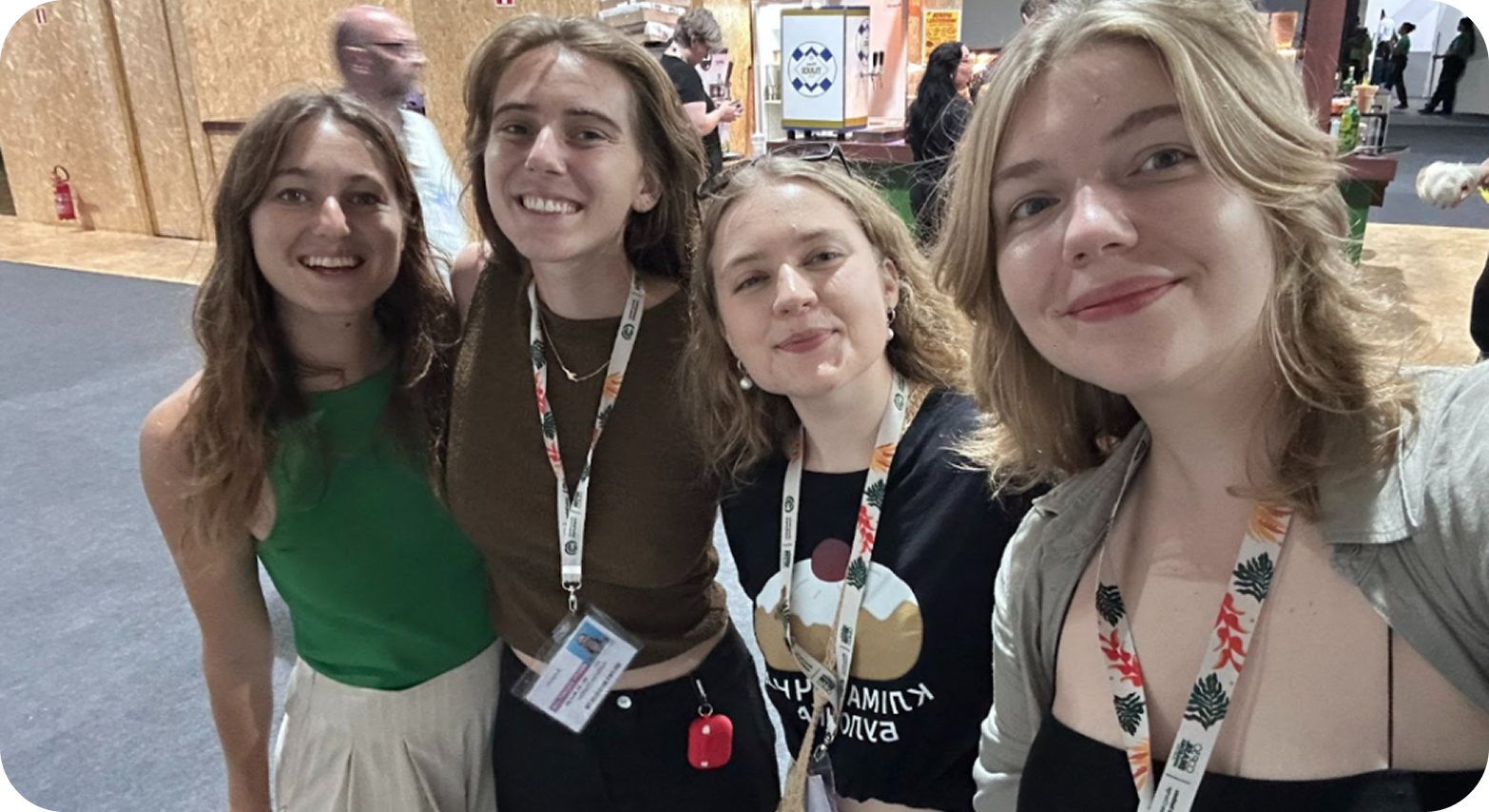
Three representatives of the youth climate initiative Rozviy took part in the COP conference — the UN Climate Change Conference — with the goal of strengthening the representation of the Ukrainian climate movement, and youth in particular, in this international space. Arina Bilai, Valeriia Bondarieva, and Viktoriia Boll spent two weeks in the city of Belém, located in the tropical Amazon region of Brazil.
The trip became a unique opportunity to engage with Brazil’s large-scale and diverse climate movement and to witness firsthand how Indigenous peoples fight for their right to a clean environment despite long-standing injustice from governments and international corporations. The activists of Rozviy also arrived in Belém with the aim of deepening cooperation between movements from countries affected by war. In addition, participation in COP30 allowed the team to gain a better understanding of the priorities of Brazil’s new Ministry of Economy, Agriculture, and Environment regarding climate policy development, as well as the position of the Ukrainian delegation in climate negotiations related to the goals of the UN Framework Convention on Climate Change and the Paris Agreement.
Mission: Amplifying Ukraine’s Voice in International Actions
During the first week of the summit, Rozviy activists joined various actions organized by the international climate justice movement to pressure negotiators from signatory countries. At protests both inside and outside the conference venue, Ukrainian activists supported the demand to establish the Belém Action Mechanism to improve public participation in coordinating a just transition toward low-emission development systems.
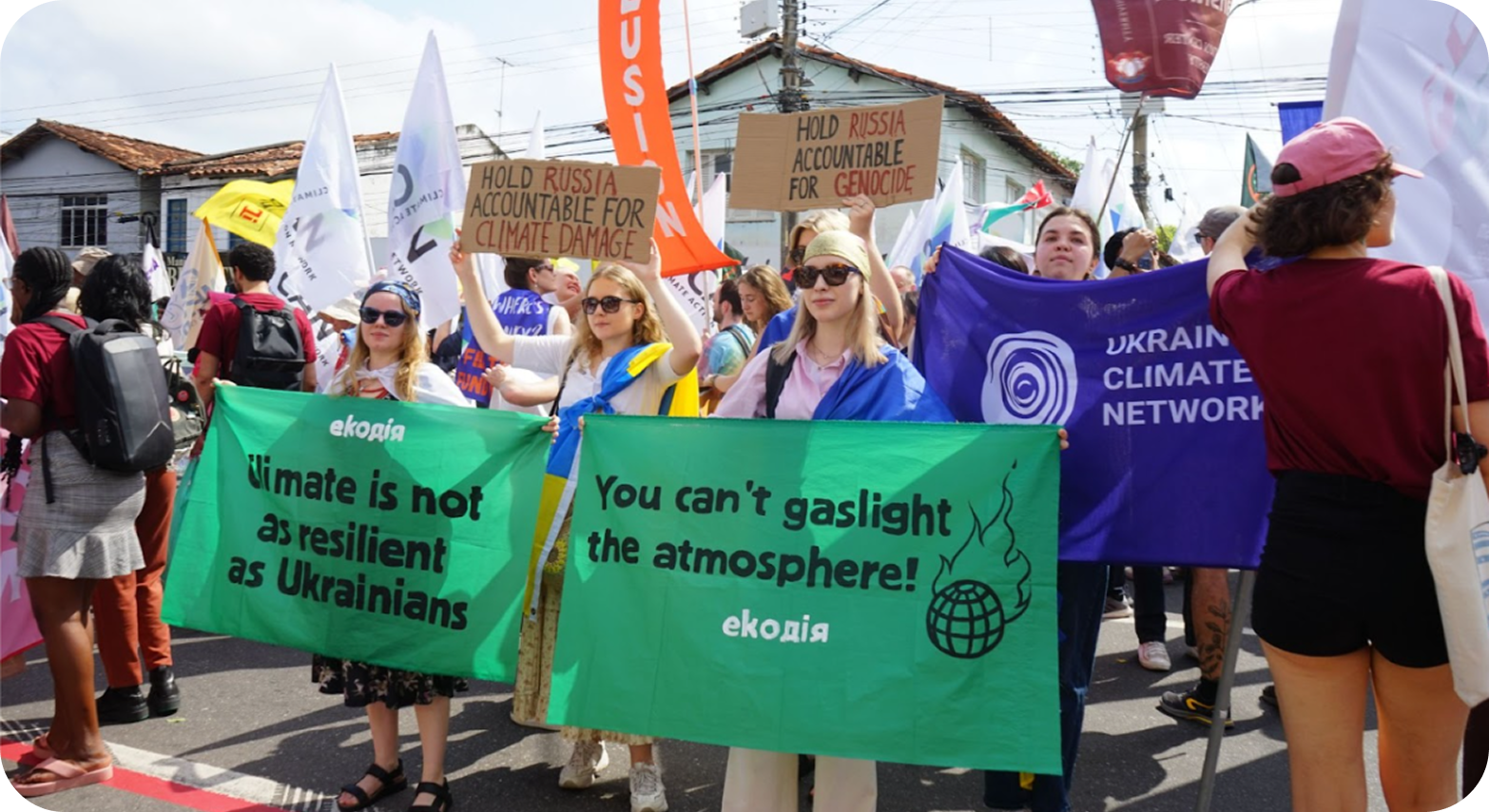
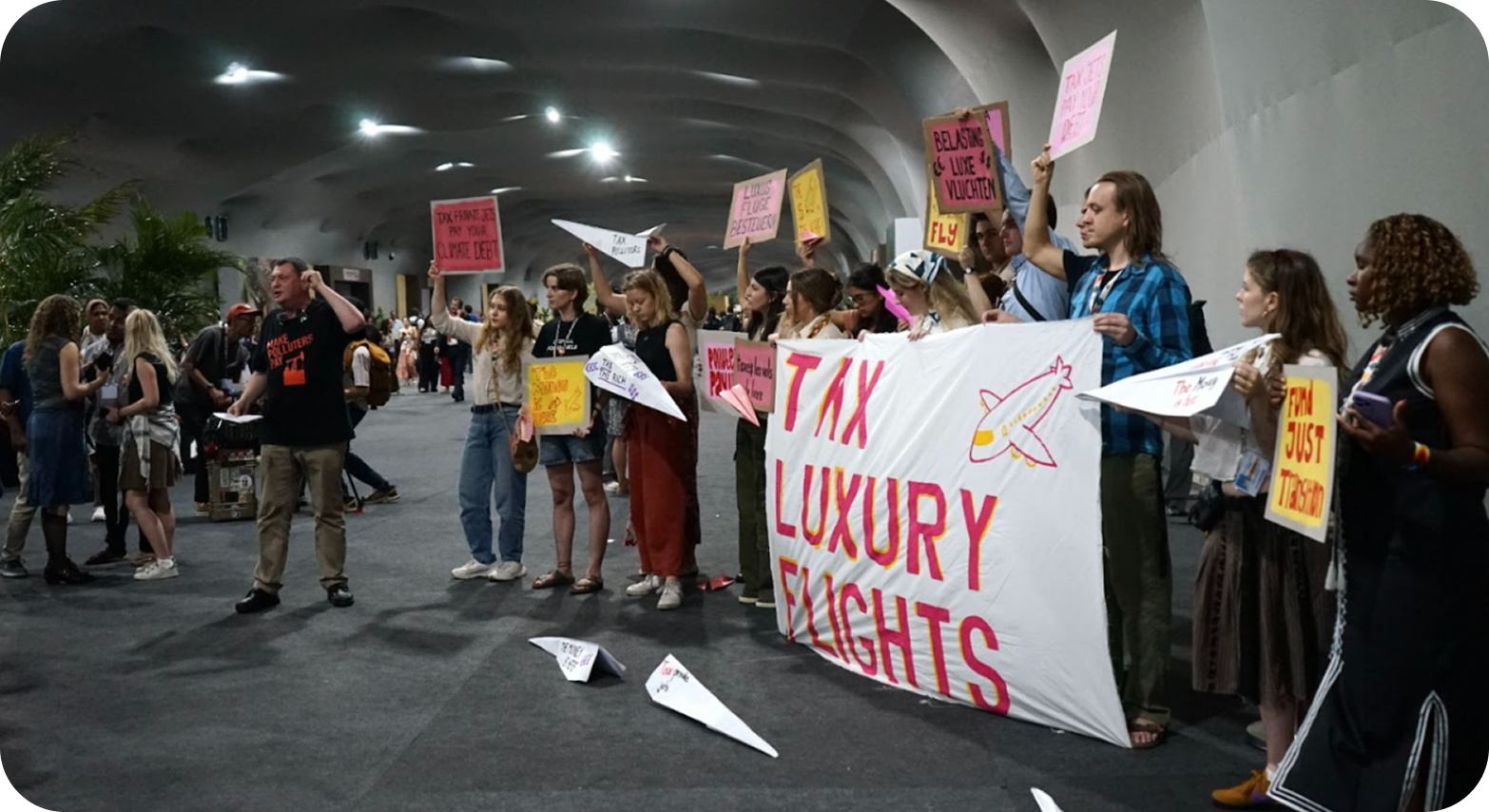
The team also strengthened advocacy for international taxation of excess profits to finance the phase-out of fossil fuels and climate adaptation. Climate adaptation is becoming increasingly critical for Ukrainian communities, which are growing more vulnerable to unpredictable extreme weather events caused by global warming as a result of the war.
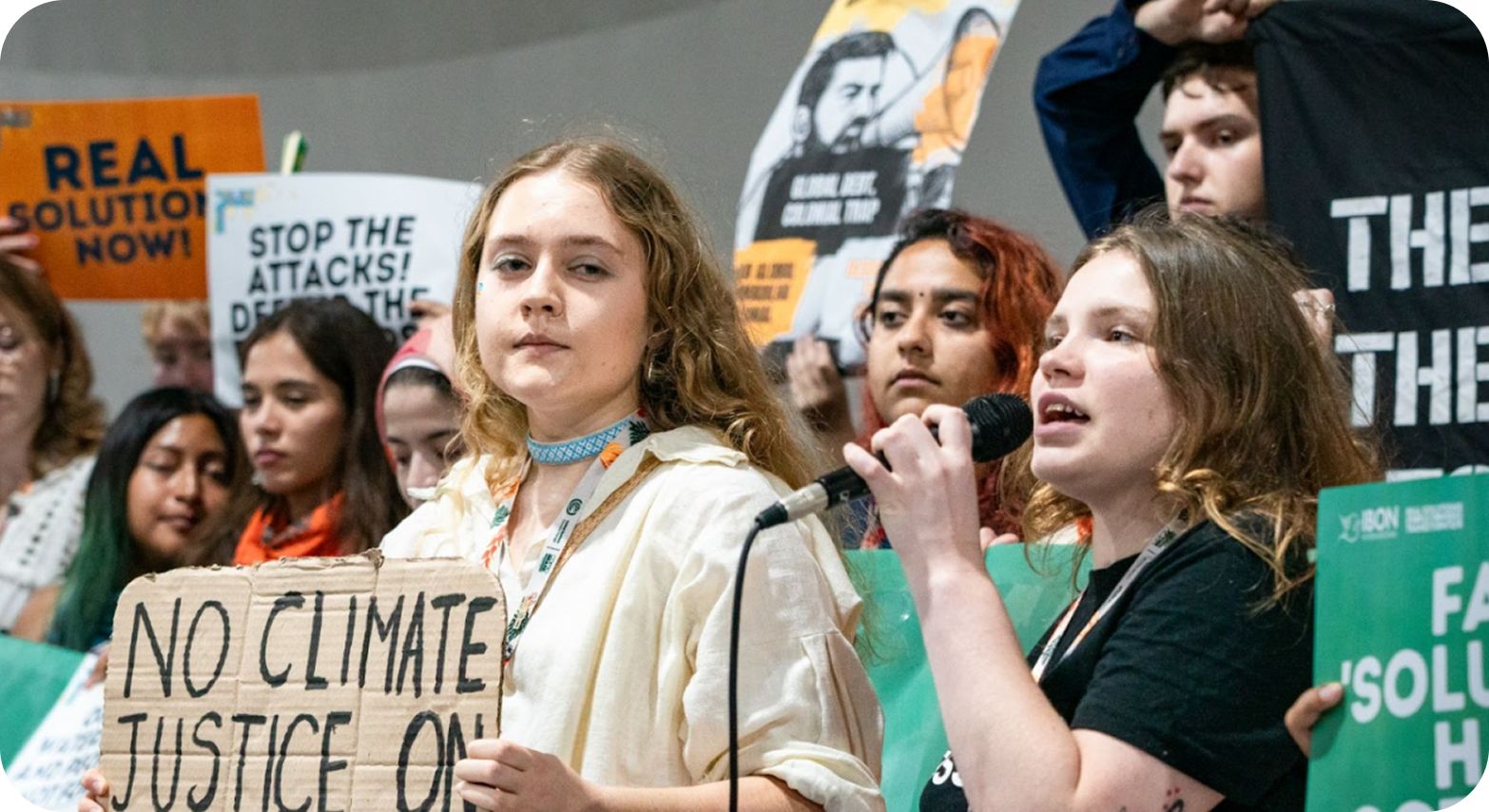
However, climate action in Ukraine is currently severely constrained by Russia’s criminal military aggression and occupation. This was emphasized by Valeriia Bondarieva, co-leader of the organization, in her speech at one of the actions. She stressed the importance of holding Russia accountable for the genocide of the Ukrainian people and for the consequences of wartime ecocide affecting Ukrainian land, climate, and human rights.
A Just Green Reconstruction of Ukraine as a Priority
Despite the challenges of the full-scale war, Ukrainian climate organizations continue working on climate adaptation solutions that simultaneously help communities meet basic needs such as electricity, water supply, and access to education. For the fourth consecutive year, members of the Ukrainian Climate Network (UCN) — which includes Rozviy — have demonstrated that renewable energy solutions are resilient to shelling and power outages caused by the destruction of energy infrastructure.
COP30 became not only a platform to highlight the work of Ukrainian climate policy experts, but also a space for experience exchange among organizations whose work does not always intersect within Ukraine. During a UCN-hosted event at the conference, Arina Bilai, advocacy manager of Rozviy, presented new projects focused on climate education for youth.
The discussion also opened opportunities for collaboration with experts from the NGO Ecoaction on advocating for climate measures that account for mental health considerations. Arina noted that one major gap in current recovery efforts is the lack of engagement with veterans as a particularly vulnerable group. Colleagues agreed and added that broader inclusion of people with disabilities in reconstruction planning is necessary to ensure truly inclusive benefits.
Deepening Cooperation with Allies in the EU
One of the team’s more unexpected achievements was establishing connections with representatives of the climate movement advocating for just climate policy at the European Union level.
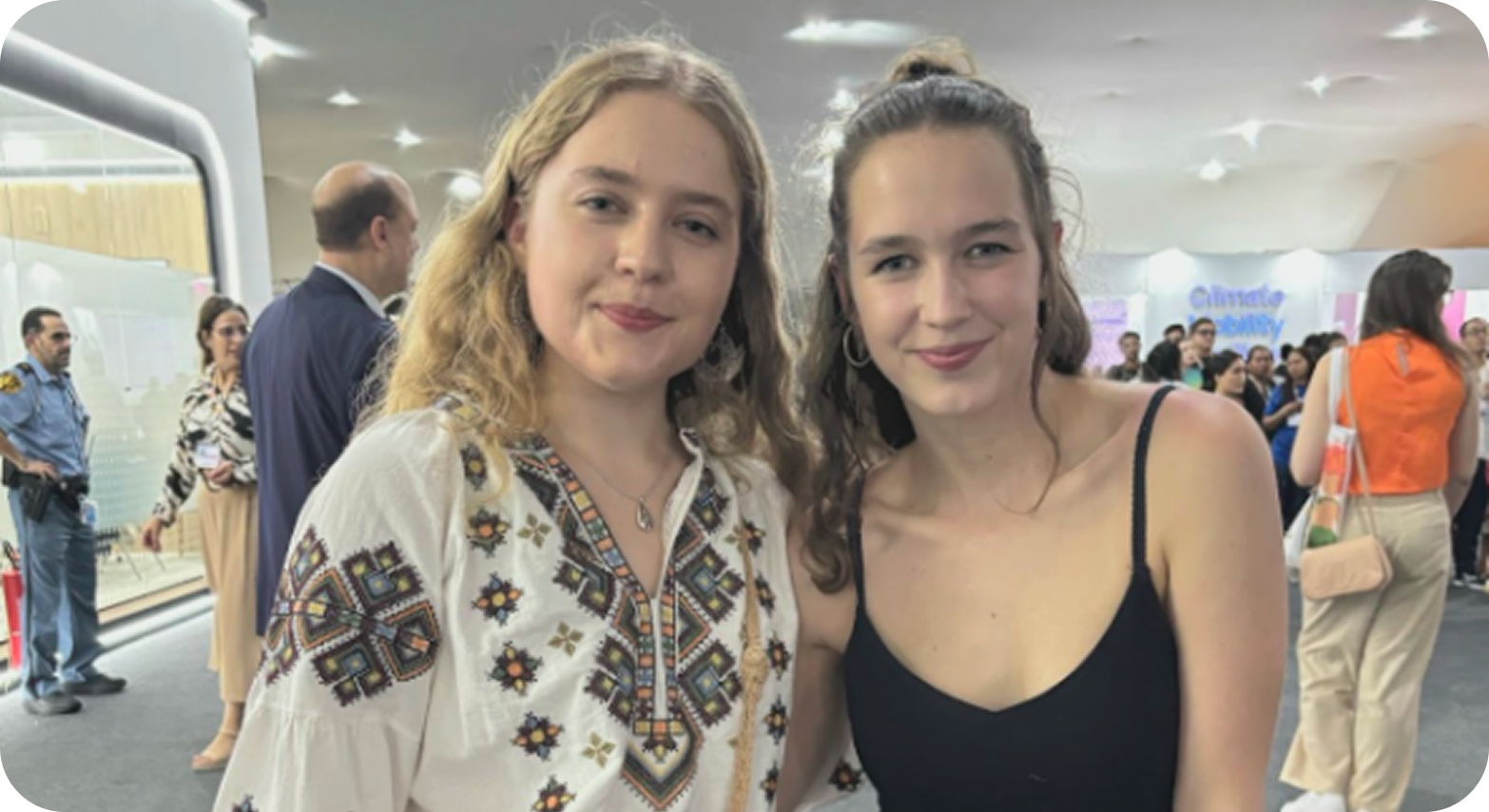
Viktoriia Boll, co-leader of Rozviy and coordinator of its international partnerships, met with Lena Schilling, the youngest Member of the European Parliament. The MEP expressed support for the Ukrainian youth climate movement and invited Viktoriia to participate in a video explaining why COP conferences remain an effective international platform.
Viktoriia also used the opportunity to highlight the disinformation spread by Russia within the summit. Rozviy’s team and Lena Schilling will remain in contact regarding further meetings to support the Ukrainian climate movement in the European Parliament.
Viktoriia also met with Adélaïde Charlier, leader of the Belgian climate movement and co-founder of The Bridge, an organization supporting European climate movements in influencing EU policies. The activists discussed future cooperation to strengthen advocacy for a just green reconstruction of Ukraine at the EU level.
Solidarity and Youth Participation in Post-War Reconstruction
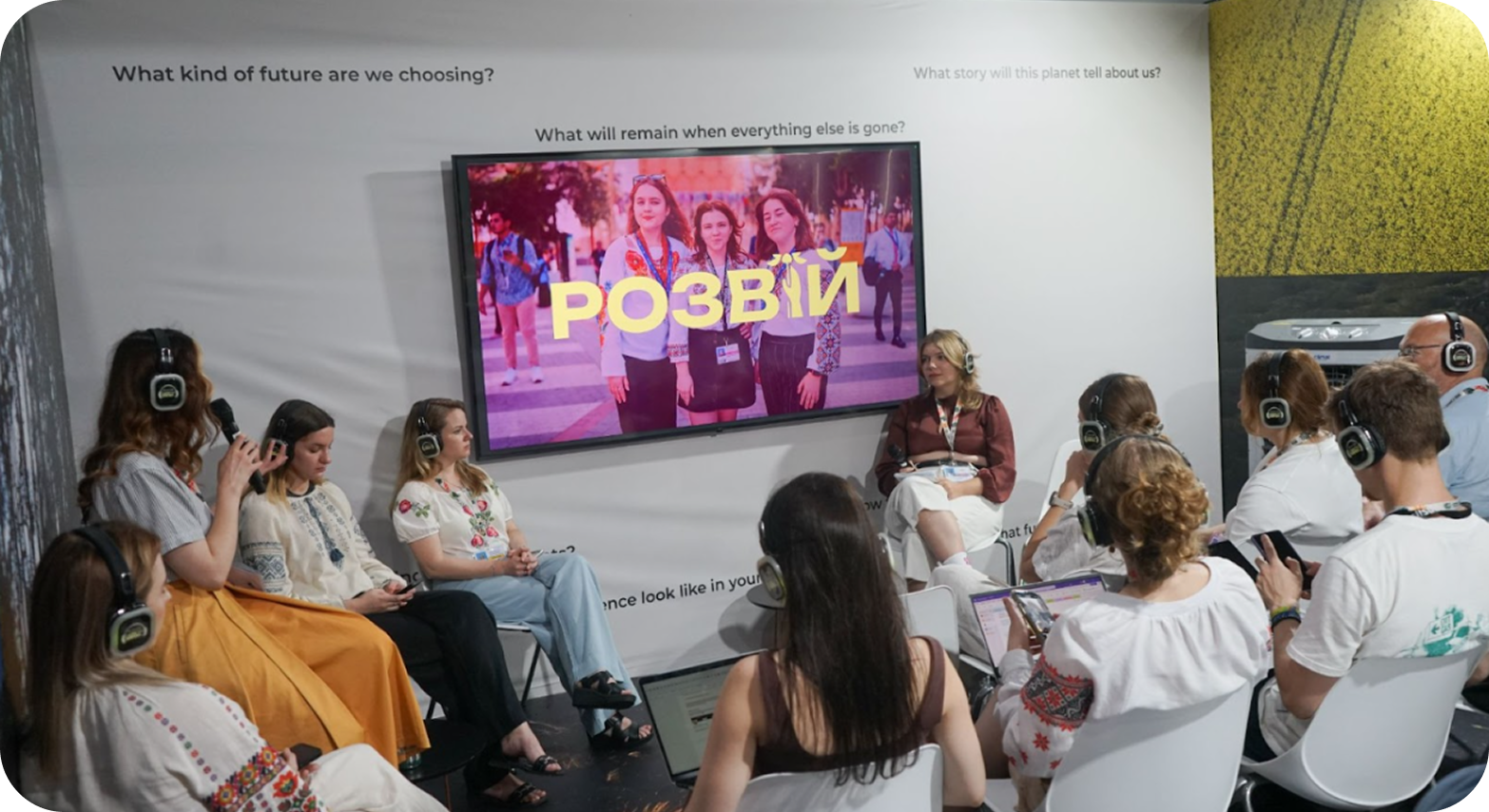
During the second week of the conference, Rozviy gathered young activists and researchers from Sudan, Syria, Ukraine, and Palestine at the Ukrainian Pavilion to discuss shared challenges of inclusive post-war reconstruction. Moderated by Valeriia Bondarieva, the discussion highlighted how similar the experiences of living through war and advocating for just climate policy are, despite geographical and cultural differences.
“When we come together, we can improve life for everyone. Youth must be the ones who stand up for their rights,” shared Roaa Alobeid from Sudan, co-founder of United Beyond Borders.
Although Sudan continues to suffer from active genocide, Roaa explained that reconstruction has already begun in some regions — but without an integrated approach that fully addresses human needs.
Farah Al-Assaad, organizer of LCOY Syria and co-founder of Syrian Climate Pioneers, emphasized the importance of climate education in reconstruction. She views climate education not only as a way to shift culture toward environmental and social responsibility, but also as a tool to counter brain drain caused by war. After the fall of Bashar al-Assad’s regime and the end of the war in December 2024, “reconstruction” became the most frequently used word in Syria, though many obstacles remain, including ongoing sanctions and discrimination.
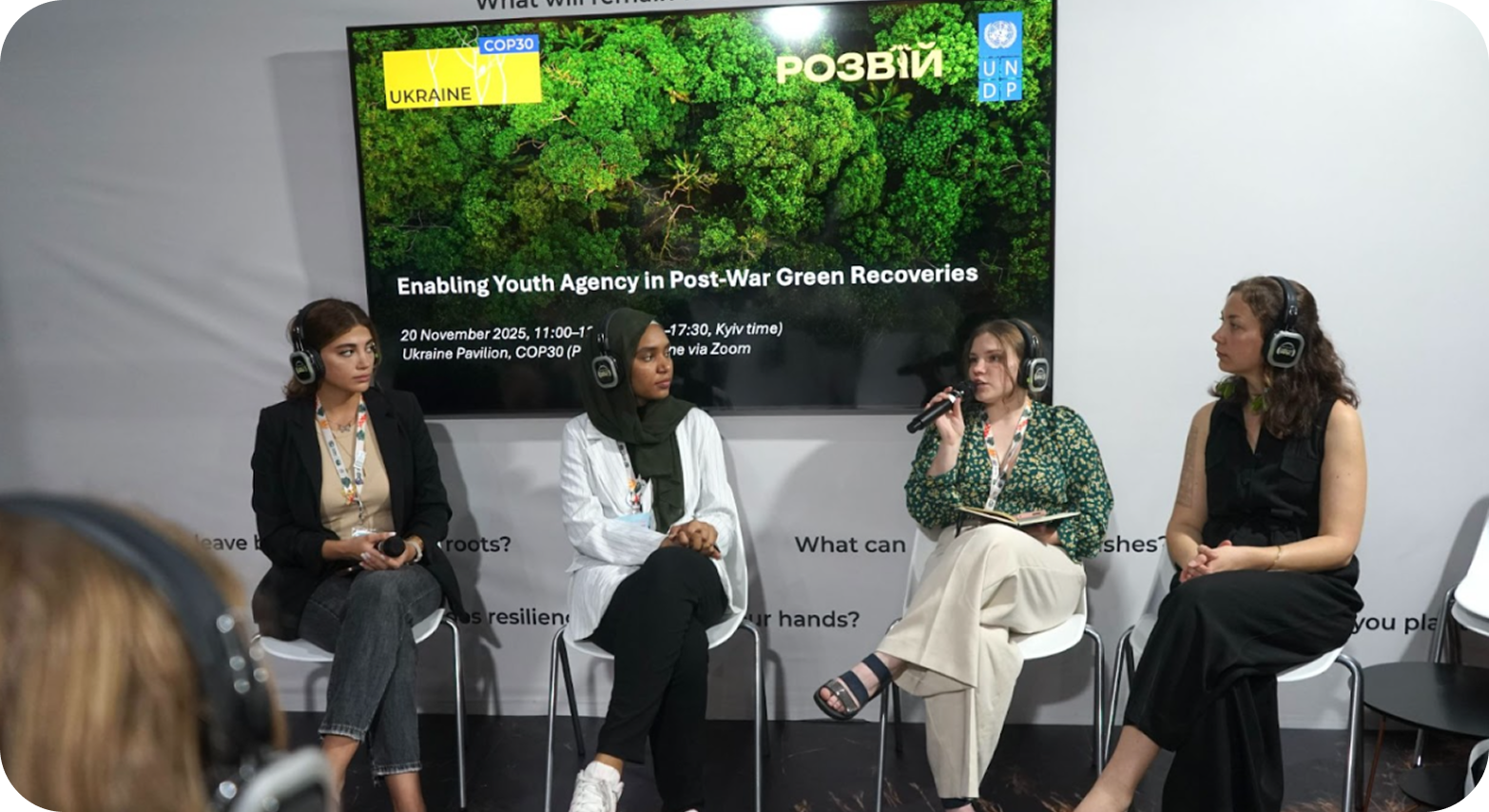
Meanwhile, Israel continues policies of genocide against the Palestinian people in Gaza. Mohammed Usrof, researcher and director of the Palestinian Institute for Climate Strategy, highlighted shared systems of injustice across war-affected countries and called for an energy embargo against fossil fuel corporations cooperating with aggressor states.
This approach to climate and energy justice strongly resonates with the Ukrainian climate movement, which since 2022 has advocated for a fossil fuel embargo — particularly on Russian fossil fuels — as a pathway to peace by cutting off funding for autocratic regimes and the climate crisis itself. Without a just peace, inclusive reconstruction is impossible, emphasized Valeriia Bondarieva.
She added that a vision of reconstruction centered on health and community well-being — through renewable energy and sustainable practices in sectors such as energy and agriculture — remains a powerful source of hope even during wartime.
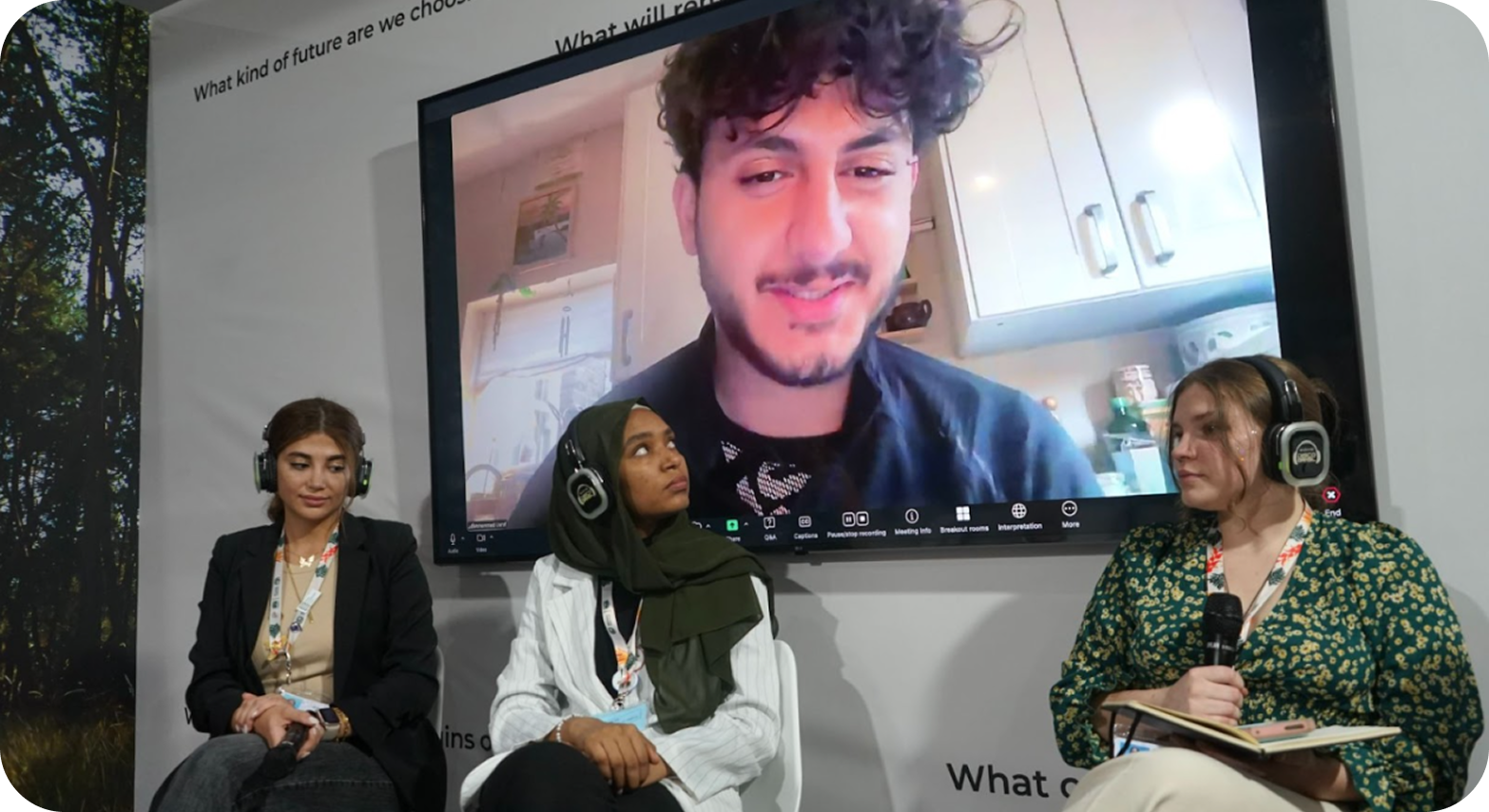
From Ukraine, Milena Komar, Director of the Kyiv School of Energy Policy, also joined the discussion. Her team won the Youth4Climate award from UNDP this year. Notably, Rozviy’s co-founders were also laureates of this award in 2023 for creating the climate podcast “Where the Future Grows” on Ukraine’s just green recovery. Milena presented a new project aimed at training 25 Ukrainian communities to measure air quality and use the data to inform local climate and energy policy decisions.
In closing, Roxani Rushas, Head of the Youth4Climate program, highlighted the challenge of insufficient funding for youth-led climate work, particularly in conflict-affected contexts. In response, UNDP introduced a new project category — “Climate, Peace, and Security” — with selected initiatives from Afghanistan, Somalia, Sierra Leone, and Indonesia in its first year, underscoring the growing relevance of climate approaches to peacebuilding and security worldwide.